


So the most remarkable thing happened. The Museum of Modern Love has been longlisted for the 2017 Stella Prize – the stellar award for women writers in Australia. This year the judges have focussed their attention on non-fiction and 9 formidable works of memoir, biography, history, social narrative and journalism have been longlisted. Plus three novels (one being The Museum of Modern Love) and one short story collection.
I’m not sure if all the other women on that list are feeling suitably in awe of their compatriots but I sure am. Honoured. And a bit stunned. But super happy. Thank you Stella judges.
The shortlist is announced March 9th and the Stella Award for 2017 will be announced in Melbourne on April 18th. Time to get some serious and exciting reading done.

The Museum of Modern LoveTim
Michael Cathcart and Radio National’s Books & Arts have a lovely section called Top Shelf. In this 10 minute edition I’ve shared a few cherished memories across art, film, music, novels and a Mary Oliver poem http://www.abc.net.au/radionational/programs/booksandarts/top-shelf:-heather-rose/8075752
The Mercury published an edited version of a speech I recently gave to The Friends School. If you have a budding (or languishing) reader, this might prove useful. The whole speech appears in a previous blog below. Happy reading.  This lovely image with thanks: http://thats-normal.com/wp-content/uploads/2016/02/book-623163_1280.jpg
The Age & The SMH published this article on the writing of The Museum of Modern Love.
The essay is here too (and without the ads!)
The writing of The Museum of Modern Love
As a writer you hear lots of stories about the writing process. How sometimes novels are written fast. How novels come through like tuning into a radio frequency and all the writer has to do is simply transcribe them. William Faulkner, it is said, wrote As I Lay Dying in 6 weeks while he worked nights as an attendant in a parking garage. This is not one of those stories.
The Museum of Modern Love has had at least five titles as it emerged. It was initially written as a first person narrative, then from seven different first person perspectives, then in the third person, and now it’s back to a sort of first person narrative. (Read it, you’ll understand). And it took eleven years.
It all started on a visit in 2005 to the NGV to see the Dutch Masters. I wandered into a side gallery and found a black and white photograph depicting a table set with some grey shadowy shapes. The small panel beside the photograph described a performance piece called Rhythm 0 by Marina Abramovic. In Naples in 1974 Abramovic had laid a table with 72 items – these included a rose, a bottle of olive oil, a loaf of bread, a feather, chains, a whip, a knife, a gun and a single bullet. For six hours Abramovic was completely passive. The audience stripped her, cut her, wrote on her face, chained her to the table, and someone loaded the gun, put it to her head and attempted to make her pull the trigger. The descriptor continued with a short biography noting that Abramovic had also walked the Great Wall of China with her once-lover and performance partner Ulay as a symbolic gesture to end their relationship.
Reading that short panel I thought, ‘Now there’s a story.’ And it took hold. I had just written The Butterfly Man – a novel based on the disappearance of the infamous British peer, Lord Lucan. Another novel about water, fish and transformation was already underway. It was called The River Wife. The early writing of that novel won an international fellowship in 2006 with the Varuna Foundation that took me to Scotland for a month in Edinburgh as a guest of the UNESCO City of Literature. There I would write a first draft of The River Wife which was published by Allen & Unwin in 2009.
At the end of the time in Edinburgh I drove north and then out to the Isle of Skye, where I’d lived and worked through a long, wet summer in 1983. There, in a small hotel, on a quiet summer evening, a story really began to form in my mind of a character based on Marina Abramovic who had given her life, and her love, to art. I went upstairs around 10pm and wrote until 5am. At the time, I thought I was really onto it. That this would be a quick novel. That it would simply flow through me. How wrong I was!
When you’re a mother of three children, a wife, when you run a family business and have some interesting health challenges, life gets pretty full. So the novel had to fit in around the edges. This is often the lot of female artists. We do not get the focused, protracted, uninterrupted periods of thinking time that have often been the bastion of male artists. We must allow our minds to work while we’re ferrying children, doing washing at midnight and cooking pancakes at 7am. And I had to complete The River Wife for publication. It was the priority.
But while The River Wife was emerging, I also kept at the ‘Marina novel’, as I would come to refer to it. In those days there was very little on the internet about Abramovic. And much of what was there was written in Italian or Dutch. So in those first years I worked solely from my imagination. Then I happened upon the library of David Walsh, creator of Tasmania’s brilliant art gallery – The Museum of Old and New Art (MONA). At that stage the museum was a large shed in the back blocks of Hobart and the library was a series of small partitioned spaces and a couple of cupboards stacked with boxes. The site for the Museum would soon be excavated, but like my book, it was still more an idea than reality.
One of the cupboards became my research space. Here was every book ever published about Marina Abramovic. It was like discovering my family history. I felt pieces of understanding falling into place. And then someone mentioned to me that Marina Abramovic was doing a show at the Museum of Modern Art (MoMA) in New York in 2010 and I knew I had to be there.
I had been to New York before and despite believing myself to be a person much better suited to remote beaches, old forests and wide blue skies, I surprised myself by falling in love with that beautiful evocation of city. So going back felt easy. I took a room again at the Chelsea Hotel (complete with worn brocade velvet couch, Harlequin-tiled bathroom and upright piano). It turned out to be one of the last months the Chelsea would still be the Chelsea before renovations would get underway that have no doubt removed the decades of creative emollient that so lubricated the place. From there, every day for several weeks, I went to MoMA to see Abramovic’s 75-day endurance performance The Artist is Present.
I sat opposite Abramovic, and met her gaze, four times. I interviewed her gallerist, Sean Kelly and her photographer Marco Anelli. I talked to people who were there watching and participating in the performance. And I wrote. I can never sleep in New York so there were long nights at my laptop, and long days sitting on the floor of MoMA waiting in the queue to sit, or simply observe.
You might think that from there, it would be easy. But it wasn’t. Because in seeing Abramovic, in visiting her Retrospective, I realised I could never create a character based on her. It would never do her justice. Any art I could think of was always going to be surpassed by her real story. So I requested of Marina that she be a character in the novel. She said yes. And it began to fall into place.
However it’s not easy to put an extremely powerful Serbian (who is still alive) at the heart of your story. For a long time I grappled with my fear. Writing is all about overcoming fear. But this felt like a PhD’s worth of fear. And there were the normal issues with structure, voice, dialogue… and the other characters who were not always forthcoming. Perhaps they were intimidated by Marina too. One enormous blessing was that with MONA built, David Walsh gave me a studio to write in, and I became the inaugural writer-in-residence in 2012-13. It was a sanctuary.
In 2010 I had also begun writing a children’s book with my friend Danielle Wood, under our pseudonym Angelica Banks. The first book led to a series that is published internationally. So suddenly we had intense deadlines. But these books were exactly the sort of delightful literary reprieve required when you are dealing, on the other hand, with a novel about marriage, love and art.
The third book in the children’s series was published in May this year. It’s called Blueberry Pancakes Forever. And now at last after 11 years, The Museum of Modern Love will be published this month. It’s the story of a film composer, Arky Levin, whose marriage is facing an excruciating reality. He is drawn to MoMA to observe the woman in the red dress who is meeting the gaze of whoever sits in the chair opposite. And life unfolds.
Curiously, the world of imagination has begun to mirror the world of fact. While I was writing The Museum of Modern Love, I began a degree in Fine Art. But that’s another story.
Heather Rose
August 2016
The Museum of Modern Love is published this month by Allen & Unwin. Heather Rose is the author of seven novels. She writes for both adults and children and has been shortlisted, longlisted or won awards for crime writing, sci-fi/ fantasy and literary fiction. She lives by the sea in Tasmania. www.heatherrrose.com.au
Up now at The Wheeler Centre is this interview.
Heather Rose is a novelist, art student and businesswoman, who writes for both adults and young readers. Her seventh novel, The Museum of Modern Love, is out now. Heather chatted with us about Leo Tolstoy, Edith Wharton and her dream of founding a School of Imagination.
Here’s a link to a Q & A for the Tasmanian Writer’s Centre Up Close & Personal following the launch of The Museum of Modern Love. Created by the wonderful Ruth Dawkins @dorkymum.
If you’d like a little insight into what it takes to write a novel, this is an article I wrote on The Museum of Modern Love that appeared today in The Age and also the Sydney Morning Herald. The Age – The Steady Gaze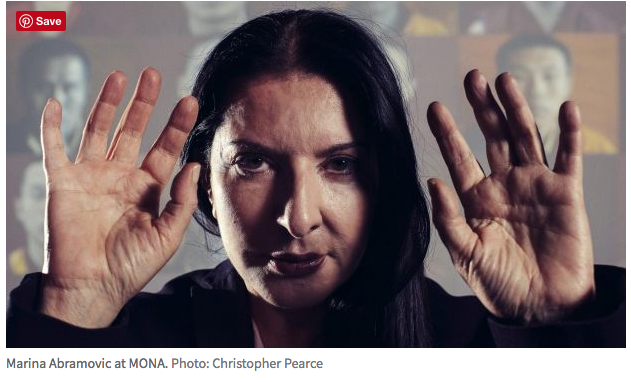

To anyone who wonders how long novels take to write … well, sometimes they take a very long time. Here is the cover art of my new novel – The Museum of Modern Love – about to be published in Australia September 2016. It’s taken 11 years. I did write 4 other novels in the meantime – but it’s been a lesson in endurance. As the cover suggests, it’s about art – and also marriage. And Marina Abramovic is a character in the novel. I hope you enjoy it.
Every year, in the hinterland of the Gold Coast, a most remarkable celebration of children’s literature takes place – the Somerset Celebration of Literature – at the Somerset College. Angelica Banks was lucky enough to be one of the thirty authors for 2016. It’s hard to express the scale of this festival. There are literally thousands of children streaming in from across Queensland to listen to authors and engage in sessions about books and words and writing.
One group of primary school students travelled 12 hours from Rockhampton by train for one day at the festival. Another had travelled 6 hours by bus.
From the extraordinary students who provide individual valets for each writer to ensure we can navigate the large campus and find our marquees, to the book shop team, the catering team, the green room team, the people who set up and put away everything it takes to create this festival, right through to the brilliant drivers who chauffeur us to various destinations, the school staff, and the teachers who make everything possible – bringing their students to experience and explore the love of literature – this is a festival that is full of heart.
Here we are about to start a workshop session wearing our Angelica Banks summer garb – having traded our long blue velvet coats etc for hats – given the 30 degree heat and 90% humidity.

Angelica Banks at Somerset Celebration of Literature 2016
Ok this is pretty exciting. Elizabeth Gilbert will be here in 10 days.
If you haven’t read Big Magic yet, please do. It’s a brilliant book on creativity. If you are an artist of any sort, or if you have friends who are trying to write their first novel, or are anywhere along the journey of the creative life, (or if you secretly think you might be more creative than you’ve ever allowed yourself to be) this is a boon companion.
I’ll have the pleasure of being in conversation with Elizabeth Gilbert at the Theatre Royal on February 18th. Apart from the wonderful Big Magic, we’ll be talking about The Signature of All Things – one of my favourite novels of all time (yes, I do mean that). And we might touch on that other (international mega-hit) book she wrote Eat, Pray, Love – and possibly the fascinating The Last American Man. We may even get to Stern Men. In short, Elizabeth Gilbert is a diverse and immensely talented writer who has so much to share about writing, commitment, creativity, productivity and courage. And if you want to hear her, it’s a one-night-only-in-Hobart opportunity. Bless the Tasmanian Writers centre for making it happen.
Tickets are selling fast so please don’t miss out. Theatre Royal Box Office

It’s been more than 41 years since Lord Lucan disappeared in 1974 following the murder of the family nanny – Ms Sandra Rivett. But this week I have received many emails from readers about the news that Lord Lucan has finally been declared dead. Again, officially and – hopefully – finally. His eldest son, George Bingham, can now claim the title and take his place in the House of Lords.
As many of you know, my second novel The Butterfly Man was based on the disappearance of Lord Lucan and imagines the twenty years beyond that fateful night in November 1974 when the man who was once Lord Lucan has settled in Tasmania. It was shortlisted, longlisted and won things. Most importantly, it continues to find friends and fans and be studied in colleges – because the mystery of Lord Lucan, and the notion of coming to terms with a past you cannot change, somehow continues to fascinate.
For a quick purchase of The Butterfly Man go to Book Depository. Also the audiobook is beautifully narrated by Humphrey Bower and produced by Bolinda Audio.
For further information here are some links on the latest, and possibly the last time, the previous Lord Lucan will make headlines:
https://theweek.com/97465/what-happened-to-lord-lucan
One of the secrets of getting books done is sometimes to run away to some secluded little spot that allows complete, uninterrupted writing time. This month I’ve been lucky enough to find a house in the perfect location for my next novel. Where it is will remain a mystery until that novel is done. Some of you might recognise it. Others will wonder where to find that magnificent sunset… or that brilliant cloudscape … ah the wonders of Tasmania.


