


Murder, theft, reinvention and redemption – a novel of family, legacy and love.
Listen to Heather talk about ‘A Great Act of Love’ on Radio National with Claire Nichols.
Read Helen Elliott’s review in The Age.
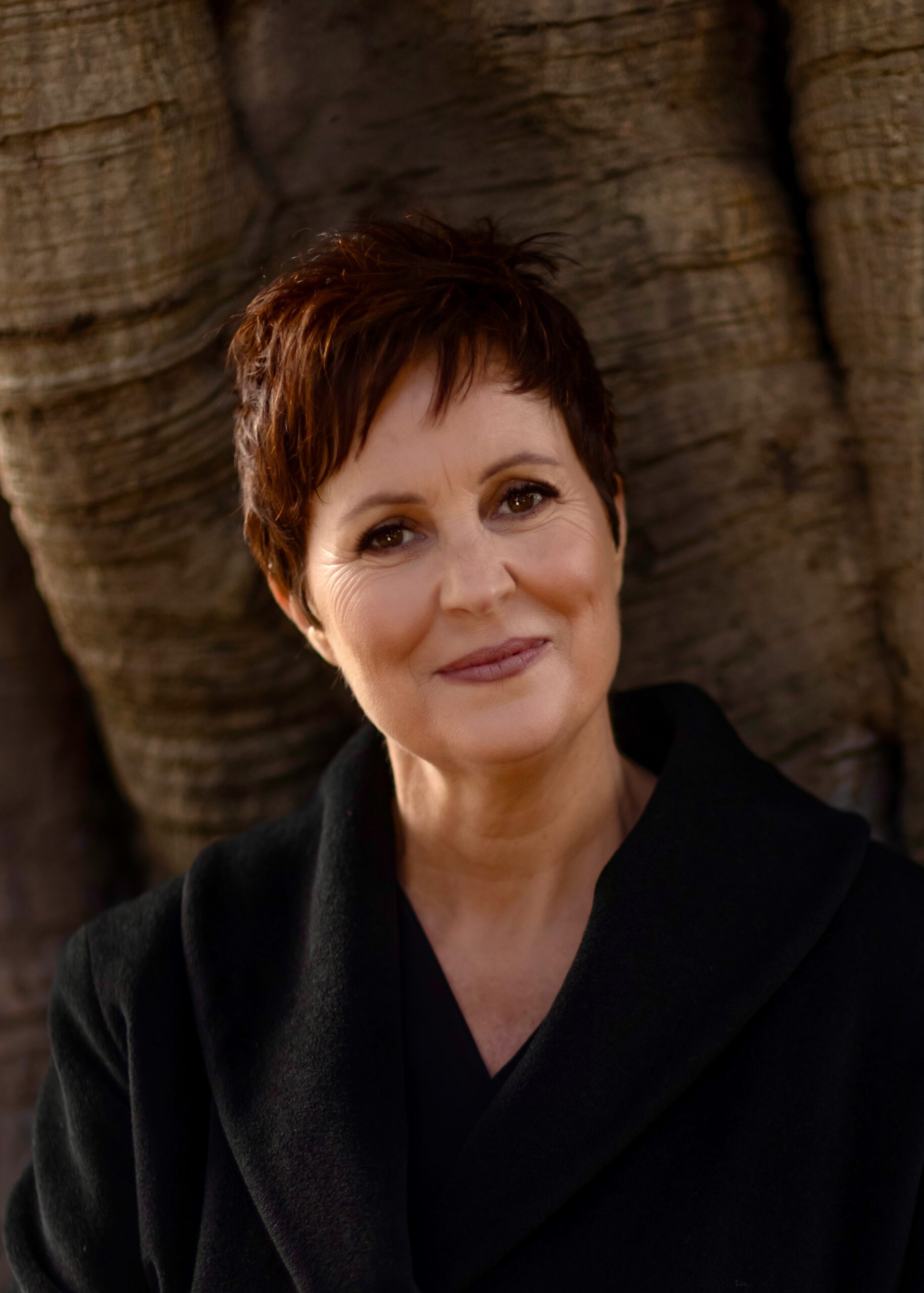
Photograph by Sarah Enticknap.
Nothing Bad Ever Happens Here is currently shortlisted for the Premier’s Prize for Non-fiction in the 2025 Tasmanian Literary Awards. It is always very special to be recognised for your work in your home territory. Tasmania has been the wellspring of all my writing. The prizes are biennial – so this is a late and lovely surprise for the memoir! And it’s a great honour to be listed alongside esteemed historian Lucy Frost, beloved author Maggie MacKellar and editor and academic Matthew Lamb. Read extracts of each work on the links in the judges’ comments below. Thank you to all the judges. My fellow shortlisted authors are:
We have been thrilled by the quality, diversity and interest of the books nominated for the 2025 Tasmanian Literary Awards. After selecting a fascinating longlist, we were faced with some difficult decisions in narrowing this down to only four books. In the end, we were in close agreement: those we have chosen resonated most strongly with the committee for many different reasons, but we would like to congratulate all the authors whose magnificent works we have carefully considered and so greatly enjoyed.
Lucy Frost’s Convict Orphans gives a fascinating insight into an underexplored dimension of colonial Australian history: the many children who found themselves displaced and disenfranchised by the convict system and the extraordinary challenges they faced. Beautifully and sensitively written, the book is a testament to Frost’s expertise and rigour as a historian, illuminating stories of deprivation and brutality, but also of resilience, hope, kindness and survival.
We have relished reading Matthew Lamb’s Frank Moorhouse: Strange Paths. Not only does this first book in a planned two-volume biography take on one of Australia’s most vivid literary figures with impressive detail and insight – it works as a social and cultural history of the author’s context, complete with the challenges he posed to the sexual mores and conventions of his times. Crucial to this is its broader exploration of Australia’s literary development, which makes this book (even!) bigger than the sum of its parts.
Maggie Mackellar’s Graft is a beautifully written memoir that takes us through a year of drought on a merino wool farm and the events and challenges that had led her there. Her intimate love for and knowledge of this piece of land on lutruwita/Tasmania’s East Coast and the fragile and resilient life it sustains is evocatively, poetically and generously shared with the reader. With elements of the best of nature writing, memoir and as a meditation on parenthood, this is a stunning book.
What a life! In Nothing Bad Ever Happens Here, Heather Rose shares her unconventional life in a lightly compelling prose style that captures the book’s complex themes with deceptive simplicity. From devastating tragedy and grief to extreme pursuits of spirituality, self-discovery and so much in between, Rose conveys her remarkable experiences in a way that allows them to be felt and understood. The undercurrent of loss and sadness runs seamlessly in parallel with joy, humour and love.
At Last! The launch video is here. Please enjoy. It’s been such a busy year so apologies for the long delay in posting this.
Also because you may not have an hour, I’ve created 4 short ‘chapters’ with The Speeches, The Interview, The Thank Yous and The People – so you can choose the section of the event you’d like to watch.
My huge thanks to Michael Gissing who created these films. And to my brilliant publishers Allen & Unwin.
Complete launch event in full …
Or in sections…
Part 1 – The Speeches
Part 2 – The Interview
Part 3 – The Thank Yous
Part 4 – The People
At Adelaide Writers Festival this year, I was privileged to be interviewed by Guardian Editor, Lenore Taylor. Here’s the interview via Spotify.

Readers have flooded me with their reviews of Nothing Bad Ever Happens Here. Thank you to everyone who has written. It has been an immense experience to read your stories, share your emotions, and glimpse your lives. To receive such exquisitely personal accounts and stories has been humbling and beautiful. Thank you all.
Here are a few extracts …
I found it a hugely comforting and inspiring read, Heather. Thank you for writing the things that are scary to write. L
I’ve now read it twice as it moved me so much. I am in awe of not only your writing but your strength and wisdom. T
I read your book in about an afternoon, tears streaming down my face like the rain outside. It has touched me in a way you wouldn’t ever believe, given me hope for my future. In you I saw myself and the beautiful life we live. So delicately connected and intelligent beyond our comprehension. I just wanted to reach out and thank you for this, from the bottom of my heart. T
Your memoir – which I just finished reading – won’t let me go. K
‘I have work to do in the world. Something is calling me.’ These are the words of yours I just read and burst into tears… your words penetrate so deeply through hardened skin. Your story is a balm. Your writing is bringing healing and direction and peace… J
I loved and appreciated your book…I feel that just reading this book has changed my life. I feel humbled in every way… T
Such a beautiful read … thank you for sharing your experiences with us. J
Your description of chronic pain has me undone. I have never read anything so searingly accurate to describe how we live this secret life of pain. You made me cry but somehow I am less alone. M
I read it in 3 days. Your writing is beautiful. C
I just can’t put it down! I just wanted to say thank you for sharing this memoir with us. It’s an amazing journey. D
Such a beautiful read and oh what an amazing journey; I couldn’t put it down! L
I swallowed your book in one beautiful gulp – reading it on a rainy afternoon and evening … I loved it. I cried. I contemplated. Thank you for your vulnerable and enlightening sharing. S
Thank you for writing the best memoir I’ve read. Your writing is always a joy! M
I also have AS and your words and wisdom have helped me so much. I cried and laughed throughout and you have inspired and changed something in my focus for the time ahead. Thank you for sharing your story. H
I just want you to know that I absolutely adored your book. It was such a joy to read. It was like reading a piece of art. Thank you thank you thank you. E
Thank you for sharing your story with us mere mortals. Thank you for having the strength to endure all you have and for embracing and sharing your choice for JOY with us all. E
I just wanted to say how beautiful your (memoir) is… As a painter of the landscape I feel you have done a poetic justice to its omnipotent nature as our backdrop. It was heartbreaking in its quiet beauty but joyous in its adventure. A real hit to the chest. J
This is not your average memoir. Magic. K
I just wanted to say how much I loved Nothing Bad Ever Happens here. It has helped me navigate a challenging time in life. Definitely a read that will stay with me! Thank you. R
Such a wonderful book – deserves every accolade. How hard it must have been to write – let alone live. Sending love. S
I listened to you on audio. I cried, laughed, took notes! A truly transformative memoir which rekindled many memories of my own life. Thank you for writing so truthfully and bravely. S
It’s a beautiful and powerful read. Thank YOU! C
Just finished your memoir. Love the way you seen the world. You’re a gem. R
Just finished your memoir. Oh my – it was authentic, beautiful, vulnerable and raw and I LOVED it. N
I’ve just finished reading your latest book which I found very moving. As an avid reader from an early age, I’ve always felt we should be grateful to people who write books. C
I listened to Nothing Bad Ever Happens Here on Audible over Easter. Wow. So many moments rang true. Your description of spiritual encounters gave words to some of my own encounters. The search, your commitment, your persistence and belief. All inspiring and fitting for me traversing through my Easter break. Thank you. V
I have just finished your memoir and feel moved by your words and the experience of reading it. It was challenging at times …and opened up a wound that I have been desperately band-aiding – and very much need to address. Thank you for giving so much of yourself to us. T
Thank you for Nothing Bad Ever Happens Here. It drew my breath away. C
Just finished reading your memoir – wonderful – thank you for sharing. R
Thank you for the beautiful read. Your words have made such an impact. I’m pondering and reflecting on my own life as I feel them settle in me. K
I have had AS since I was 11 and have never had the words to describe how I feel so people would understand. Reading your memoir made me uncontrollably weep as my feelings were finally validated. I was given your book by a friend who thought it might help me and I don’t think she will ever realise how right she was … so just a huge thank you. E
I just finished your book. How did you know??? So many stories that relate to me and my life!!! I had tears reading it. An amazing book. D
photo – Peter Mathew
Shortlisted – 2020 ABIA Fiction Book of the Year
Bruny is shortlisted for Fiction Book of the Year in the 2020 Australian Book Industry Awards. It’s in excellent company. A shortlist will be announced on April 28th. The winners will be announced on Wednesday 13 May in a virtual event. More details to come here.
Bruny – Heather Rose (Allen & Unwin, Allen & Unwin)
Silver – Chris Hammer (Allen & Unwin, Allen & Unwin)
Cilka’s Journey – Heather Morris (Echo Publishing, Echo Publishing)
Good Girl, Bad Girl – Michael Robotham (Hachette Australia, Hachette Australia)
The Scholar – Dervla McTiernan (HarperCollins Publishers, HarperCollins Publishers)
Check out all shortlisted books and authors and booksellers here.
Shortlisted – 2020 INDIES Book of The Year
Bruny was shortlisted for Book of the Year in the 2020 Independent Booksellers Awards. These awards recognise our wonderful independent booksellers across Australia.
There Was Still Love by Favel Parrett (Hachette Australia) (WINNER!)
Bruny by Heather Rose (Allen and Unwin)
The Wife and the Widow by Christian White (Affirm Press)
The Weekend by Charlotte Wood (Allen and Unwin)
The 2020 INDIE Fiction Award winner is There Was Still Love by Favel Parrett – an exquisite book and highly deserving. More here.
During this long period of isolation I am keenly aware of what it will take to be a parent to young children. For many years, I’ve been going into schools and reading the Tuesday McGillycuddy series to primary school children. I also dress up as one of the main characters – Serendipity Smith.
So, to make a small contribution at this time, I’m going to read a chapter of Finding Serendipity at 4pm Australian Eastern Standard time on Facebook beginning Monday April 6th.
If readers want more, I’ll keep going. (In Australia there’s a long winter ahead.)
The series has been published in Australia, the USA and Germany. It has twice been shortlisted for Best Children’s Fantasy Novel in the Aurealis Awards. The books are fantasy but they’re also about creativity and family, love and courage. We also wrote them to encourage and support young writers.
If you have younger readers aged 8 – 12, I’d love them to join me. I’ll also suggest some creative exercises they can do beyond the reading to keep them entertained a little longer.
There may even be dressing up.
If you’re in a different time zone, I’ll be posting the readings to YouTube here. Subscribe if you enjoy.
Delighted to have Bruny make the Indie Book Awards shortlist for Best Fiction Book of the Year – in amazing company with my fellow authors Charlotte Wood, Favel Parrett and Christian White. Here’s what the Indies website has to say about this year’s shortlists across all categories:
Australian independent booksellers, members of Leading Edge Books, are thrilled to announce their SHORTLIST for the Indie Book Awards 2020 for the best Australian books published in 2019!
The Category Winners and the Overall Book of the Year Winner will be announced at the Leading Edge Books Annual Conference Awards Dinner to be held on Monday 23 March 2020 in Brisbane, QLD.
Established in 2008, the Indie Book Awards recognise and celebrate this country’s incredible talent and the role independent booksellers play in supporting and nurturing Australian writing.
Who will win in each category in 2020?
Who will take out the overall ‘Book of the Year’ Award?!
Without further ado…
Without further ado…
The Shortlist for the Indie Book Awards 2020:
FICTION
There Was Still Love by Favel Parrett (Hachette Australia)
Bruny by Heather Rose (Allen and Unwin)
The Wife and the Widow by Christian White (Affirm Press)
The Weekend by Charlotte Wood (Allen and Unwin)
NON-FICTION
Your Own Kind of Girl by Clare Bowditch (Allen and Unwin)
488 Rules for Life: The Thankless Art of Being Correct by Kitty Flanagan (Allen and Unwin)
Tell Me Why by Archie Roach (Simon & Schuster Australia)
Sand Talk: How Indigenous Thinking Can Save the World by Tyson Yunkaporta (Text Publishing)
DEBUT FICTION
Wearing Paper Dresses by Anne Brinsden (Macmillan Australia)
Allegra in Three Parts by Suzanne Daniel (Macmillan Australia)
The Van Apfel Girls Are Gone by Felicity McLean (Fourth Estate Australia)
Heart of the Grass Tree by Molly Murn (Vintage Australia)
ILLUSTRATED NON-FICTION
The Lost Boys by Paul Byrnes (Affirm Press)
Finding the Heart of the Nation by Thomas Mayor (Hardie Grant Books)
The Whole Fish Cookbook by Josh Niland (Hardie Grant Books)
In an Australian Light edited by Jo Turner (Thames & Hudson Australia)
CHILDREN’S
The Illustrated Encyclopaedia of Ugly Animals by Sami Bayly (Lothian Children’s Books)
Into the Wild: Wolf Girl, Book 1 by Anh Do, illustrated by Jeremy Ley (Allen and Unwin Children’s)
The Tiny Star by Mem Fox & Freya Blackwood (Puffin Australia)
Young Dark Emu: A Truer History by Bruce Pascoe (Magabala Books)
YOUNG ADULT
The Surprising Power of a Good Dumpling by Wai Chim (Allen and Unwin Children’s)
Aurora Rising: The Aurora Cycle 1 by Amie Kaufman and Jay Kristoff (Allen and Unwin Children’s)
It Sounded Better in My Head by Nina Kenwood (Text Publishing)
Monuments by Will Kostakis (Lothian Children’s Books)
This is how it works. The twenty-four shortlisted books, the best titles of the year as nominated by Australian independent booksellers themselves, will be vying for the top spot as the Overall Indie ‘Book of the Year’. Panels of expert judges (all indie booksellers and avid readers) will choose the winners in the six book categories – Fiction, Debut Fiction, Non-Fiction, Illustrated Non-Fiction, Children’s books (up to 12yo) and Young Adult (12+). Independent booksellers from around the country will then vote to select their favourite book of the year from the six category winners.
Since the Awards inception in 2008, the Indies have a well-deserved reputation for picking the best of the best in Australian writing. Past Book of the Year winners have gone on to be bestsellers and win other major literary awards. Previous winners include: Boy Swallows Universe by Trent Dalton; Nevermoor: The Trials of Morrigan Crow by Jessica Townsend, The Dry by Jane Harper; The Natural Way of Things by Charlotte Wood; The Bush by Don Watson; The Narrow Road to the Deep North by Richard Flanagan; The Light Between Oceans by M.L. Stedman; All That I Am by Anna Funder; The Happiest Refugee by Anh Do; Jasper Jones by Craig Silvey; and Breath by Tim Winton.
The Awards recognise and celebrate the indie booksellers as the number one supporters of Australian authors. What makes our Indies uniquely placed to judge and recommend the best Aussie books of the past year to their customers and readers, is their incredible passion and knowledge, their contribution to the cultural diversity of the Australian reading public by recommending books beyond the big brands, and their love of quality writing.
The Indie Book Awards would like to gratefully acknowledge the 2020 Awards Sponsors: Simon & Schuster Australia, Pan Macmillan Australia, Affirm Press, Thames & Hudson Australia, Allen & Unwin, Text Publishing and Awards partner: Books+Publishing.
Source of all this: https://www.indiebookawards.com.au/post/shortlist-announced-for-the-2020-indie-book-awards
Review by Rohan Wilson in The Australian‘s Review magazine Saturday November 9, 2019.

For the most part, Australian literature in the 21st century is fairly toothless.
On a good day, our writers can muster up some anger at the appalling treatment of our First Nations people or for the equally appalling treatment the LGBTI community suffers.
But outside of these worthy causes it seems as if our writers enjoy a middle-class contentment that turns their gaze inward to domestic life, rather than outward to civic life.
Meanwhile, the world is going through an economic revolution. The billionaire class and their neoliberal political attack dogs have convinced us that competition is the defining characteristic of human relations.
Wealth inequality is causing epidemics of depression, suicide and obesity. Property ownership has become an impossible dream for whole swaths of the community. A handful of powerful corporations are busy destroying our climate. Are our best writers asleep to what’s going on around them? Or worse, are they happy with the status quo?
Heather Rose is perhaps the last writer I would have expected to come out swinging. Her previous novel, The Museum of Modern Love, won a swag of awards for its depiction of performance artist Marina Abramovic and her piece, The Artist is Present. It was a quiet, contemplative novel about the way art can bring people together and give us hope.
Now we have Bruny, which is more like a hand grenade than a book, with its excoriating satire and explosive views on our political and economic trajectory. It’s the best evidence we have yet that Australian writers are finally waking up to the unfolding crisis.
It begins with an explosion on the newly built Bruny Island bridge in the south of Tasmania. The bridge is meant to connect Bruny to the mainland, making life easier for the locals and boosting tourism.

The explosion has the hallmarks of a terrorist plot and it quickly becomes a central issue in the looming state election. Enter Astrid Coleman. Astrid is called in by her brother, JC, the premier of Tasmania and Liberal Party strongman. He wants a speedy resolution and thinks Astrid, who is an expert in conflict resolution based in New York, can bring together the various factions fighting over Tasmania’s future. But as Astrid starts to dig, she soon learns that JC’s motives are more nefarious than she first assumed.
Rose takes an episodic approach to her story, with Astrid in the field gathering information from bridge workers, restaurant owners, greenies, and anyone who might have reason to blow up the bridge.
A picture of contemporary Tasmania begins to emerge. We see how the politics of austerity have impoverished the community, we see how privatisation has given more and more power to unaccountable private tyrannies, and see, perhaps most frightening of all, that China has moved in to take advantage of Tasmania’s clean, green potential.
Astrid is not without her own problems, too. We learn that her parents’ marriage has left her with some anxieties to work through. And Astrid is divorced. Her children, like Astrid, both live in New York.
While she is world weary and somewhat cynical about her brother’s agenda, she maintains an optimistic outlook and a deep love for the island of her childhood. But her optimism is seriously challenged by the conspiracy she uncovers as the facts behind the destruction of the Bruny Island bridge come to light.
This is where the satire in the novel really starts to bite. The Chinese Communist Party views Tasmania as yet another Third World location where it might win some influence through investment in infrastructure. It insists that Chinese workers be shipped in to complete the repairs to the bridge and the Liberal government enthusiastically agrees.
Astrid starts to think that the bomb plot may have been staged in order to win support for a change in local employment laws to allow foreign workers to be shipped in wholesale. In fact, the truth is much, much worse.
As I read on and the scale of the conspiracy became clear, I had to put the book aside because I was laughing so hard.
This is audacious writing. It exposes the lies at the heart of neoliberal economics more clearly than any book in recent memory, and it does so with a vicious sense of irony.
And there’s something here for everyone. Whether it’s Astrid’s rule-breaking romantic interest in Dan, the manager of the bridge workers, or the family drama between Astrid and JC, or the political commentary and piss-taking, there are moments on every page that keep narrative tension bubbling away.
I certainly expect to see this book feature in major prize shortlists over the next 12 months. It’s the wake-up call we needed.
Bruny
By Heather Rose. Allen & Unwin, 424pp, $32.99
Rohan Wilson‘s most recent novel is Daughter of Bad Times.
From Heather: Rohan’s wonderful novel The Daughter of Bad Times shares many of the same concerns as Bruny – but is set in 2074 … do go seek it out!
A profile by Stephen Romei at The Australian
LITERARY EDITOR
You are a UN conflict resolution expert based in New York. Your brother is the Tasmanian premier. Your sister is the Tasmanian opposition leader. Your mother has cancer and your father is sliding into dementia and speaks only in Shakespearean quotes.
Someone blows up part of an almost-completed $2bn bridge joining Tasmania to its offshoot Bruny Island. You, dispatched to the scene, spot a bloke who looks as if he’d know how to handle explosives, but on the plus side he resembles Chris Hemsworth.
Welcome to the weird, wonderful, sad, nervous, bold and hilarious interconnected world of 56-year-old Astrid Coleman, the lead character in Heather Rose’s new novel Bruny, named after the 362sq km island at its centre, permanent population about 600.
“The whole book was the most amazing amount of fun I’ve ever had writing in my life,” the author says. “I laughed and laughed.”
Rose’s family has lived in Tasmania for six generations and Bruny Island, accessible only by boat, has been important to her throughout her life. It was a place of fun and games for Rose as a kid and it has been a place of peace and quiet for her as a writer. A lot of that laughing during the writing of the novel, which is part thriller, part political satire, part romance, was due to Astrid’s formidable presence in Rose’s life.
Some writers treat their characters as galley slaves. They tell them when to row, where to go and when to stop. Others live with their characters, have conversations with them, are guided by them. Rose is in the latter camp. “Yes, my children think that is strange,” she admits.
Astrid, better known as Ace because as a child she cheated at cards, even came to her in a dream and suggested — perhaps demanded is a better word — an important development in the plot.
“That night she wiped me out with something so shocking it left me sitting up in bed,” Rose says.
Rose used to argue with her characters and sometimes try to say no to them, but she has stopped doing that now and is more comfortable with the relationship as a result.
“I think that’s the trick, isn’t it? I’m so grateful that Astrid only came at this point (Bruny is Rose’s fifth novel for adults). I might have tried to push her around if she’d come earlier, but this time I just let her have her head, and I was shocked by her so many times.
“She’s quite an outrageous character and she says things about life, men, politics, ideology, everything, really, and I would type it all out, look at it and think, ‘I can’t say that. That’s terrible. And then I’d think, ‘Oh, well, Astrid said it.’ ”
Here’s a good example, when Astrid, who has two grown children, is thinking back on her failed marriage: “Everyone should have to get divorced from the person they’re married to, just to see who that person really is.”
Bruny is Rose’s first novel since The Museum of Modern Love, centred on Serbian performance artist Marina Abramovic, which won the 2016 Stella prize. It is also the first one she has been able to write full time, thanks to the Stella cheque and an Australia Council grant. Rose, 55, dabbled in modelling and acting when she was young but has earned her living as an advertising copywriter, then as co-founder of an award-winning advertising firm, Coo’ee Tasmania. She has three grown children.
“The Museum of Modern Love took me 11 years. It was a very long process. I wrote four other novels in the meantime, and it was a tedious novel in so many ways. Sorry.
“There was a gruesomeness to writing it. It was arduous. It took everything, that novel. And then, it had all the success, which was such a surprise. Then on the back of that, the Australia Council, for the first time after 10 applications over 23 years, gave me a grant to work on this novel.
“I had already been coming up with a few thoughts about it and writing scenes and all of that. But there was something so brilliant about being able to knuckle down with this idea that the Australia Council had funded me to write a political satire about Australian government.”
After that explosive set-up, Bruny unfolds as a power and passion drama about family, loyalty, home, place, politics, foreign investment and love. It is in part a love letter to the author’s home state.
Yet Tasmania is a familiar but estranged place for Astrid, who has lived most of her adult life in New York. She returns to help her twin brother, John, the Liberal premier, known in the family as JC, a man who can walk on water, who is set to go to the polls in four months. He has asked her to bring together the opposing sides in the bridge debate, the established Tasmanians and the greenies versus the newcomers, the developers and the Chinese investors, so the bridge can be fixed and opened before the election.
The opposition leader, Maxine, is their older sister. She is the one who has continued the family tradition as she is the Labor leader. Their father, Angus, was a state Labor MP for decades. JC switched sides.
“If this book is a love story, it is a love story for my fellow Tasmanians,” Rose says. “There’s no way I could do justice to this community without talking about the spectacular visual beauty we live in every day and how much that colours our life.
“But I also can’t help but observe Tasmania and what we’re seeing in terms of visitor numbers and consider what that means in the next five years, in the next 10 years, in the next 20 years.
“And when I was writing the book, I was immersed in current affairs, to everything that was coming out of the US, the UK and here in Australia. I do think it’s important we have better conversations about our national security planning, about our long-term economic planning … and about what on earth are we doing about protecting ourselves from the climate emergency.
“Clearly we do not have leadership on any of those fronts. One of the things that I enjoyed doing was looking into the nature of democracy.”
The novel is set in the near future, which turns it into a delightful guessing game for readers. Who is the prime minister? (Hint: I think it’s a comeback.) Who is the king of England? Who is the American president? Who is the bestselling writer-public intellectual greenie camped on Bruny Island? (Hint: I don’t think it’s Richard Flanagan.)
I’m not going to spoil the fun for readers, so I’ll leave the possible name out in this example. When I say to Rose that the federal minister for natural protection Aiden Abbott, better known as Aid-n-Abet, is obviously … she laughs and nods. A friend of Rose sitting with us chips in. “You’ve been very naughty,” she tells the author, who laughs some more.
As well as the name game, other tantalising questions linger from the outset. Who blew up the bridge? Why? Is it an act of terrorism? Is the brother-sister political opposition just a front that allows one family — Coleman Inc — to control the state? Does China have Australia’s interests at heart or are we just part of its “chequebook colonialism”?
And is Astrid working for someone else other than the Premier? Early on she notes “I have to hide the truth, that’s always been my speciality”, and wonders: ‘‘Would I ever kill for an ideal?” A reader’s impression of what that ideal may be will shift as the novel goes on.
The Shakespearean quotes from Angus are not just there for fun. This novel has Shakespearean undertones. Readers will think of Lear, The Merchant of Venice, The Tempest and especially Hamlet, where one can “smile, and smile, and be a villain”. No one is exactly who they seem to be.
“It’s beautiful as a writer to be part of a lineage,” Rose says. “I think as a writer it’s very hard to ignore the influence of great writing, especially what’s been given to us in the dramatic realm. And of course Shakespeare is so political.”
The political intrigue at the centre of this novel is the result of a lot of research. Rose spoke to friends and contacts who worked in, or had connections to, political parties, security agencies, government authorities and the UN.
She was particularly nervous about the scenes where the bridge is blown up, worried that readers in the know would tell her she didn’t understand the nuts and bolts of it.
So she made contact with explosives experts, people similar to her fictional former paratrooper now bridge foreman who looks like Hemsworth.
“They did come back to me,” she says, “and were willing to advise me, but on one provision. They said: ‘This is for a work of fiction, right?’ ”
Bruny, by Heather Rose, is published by Allen & Unwin (424pp, $32.99).
LITERARY EDITOR Stephen Romei is The Australian’s literary editor. He blogs at A Pair of Ragged Claws and can also be found on Twitter and Facebook. @PairRaggedClaws

My first book tour is over. Bruny has been launched across Australia. Thank you to all the bookstores that so graciously and delightfully welcomed me and Bruny to author events across the country. It was such a pleasure to meet readers everywhere, brilliant booksellers, and to discover so many beautiful bookstores! Apart from the events below, there were also so many signings at independent bookstores and Dymocks stores in every city. Thank you all!
My thanks to the very dedicated and brilliant publicist from Allen & Unwin – Christine Farmer – who made all this happen … and visited endless shopping centres with me for signings. Also to Ange Stannard and Maria Tsiakopoulos in WA and Victoria who chaperoned me in those states. Also to the awesome Allen & Unwin team who designed all the Bruny collateral that decks windows and bookstores across Australia. So wonderful to have this kind of support for a novel.
Events were held at:
Hobart Sunday Sept 29 3.30pm Fullers Bookshop In Conversation with Literary Editor of the Australian, Stephen Romei
Hobart Tuesday Oct 1 6pm Official Bruny Launch Hobart RACV Hotel 6pm with Premier Will Hodgman and supported by Dymocks – SOLD OUT
Sydney Wednesday Oct 2nd 6.30pm Better Read than Dead In Conversation with Editor of The Guardian, Lenore Taylor
Wollongong Friday Oct 4th 6pm Wollongong Art Gallery In Conversation with author and journalist Caro Baum
Perth Sun Oct 6th 4.30pm National Hotel Fremantle with New Edition Bookstore In Conversation with ABC Perth’s Gillian O’Shaughnessy
Perth Mon Oct 7th 6.15 for 6.30pm Beaufort Street Books In Conversation with Jane Seaton
Brisbane Tuesday Oct 8th 6.15 for 6.30pm Riverbend Books In Conversation with Suzy Wilson
Brisbane Wednesday Oct 9th 6 for 6.30pm Avid Reader In Conversation with award-winning author Rohan Wilson
Adelaide (Stirling) – Thursday Oct 10th 6.30 for 7pm Matilda’s Bookshop In Conversation with Gavin Williams
Melbourne Friday Oct 11th 6.45pm for 7pm – PLEASE NOTE CHANGE OF VENUE: Avenue Bookstore, 127 Dundas Place, Albert Park In Conversation with James Ley – SOLD OUT
Sorrento Saturday Oct 12th evening event The Antipodes Bookshop – details to come
Melbourne Sunday Oct 13th 4pm Fairfield Bookshop In Conversation with Heather Dyer


